
A great property decision isn't about finding the cheapest property. It's about knowing what you're buying, why you're buying it, and whether the value justifies the price.
Say "Warren Buffett" and most people think of stocks and Berkshire Hathaway. But his habits of thought, understanding value, staying calm, thinking long term and paying a sensible price, work just as well when you're choosing a home, plot, shop or rental investment.
Here is how to use them.
1. Don't buy just because everyone else is buying:
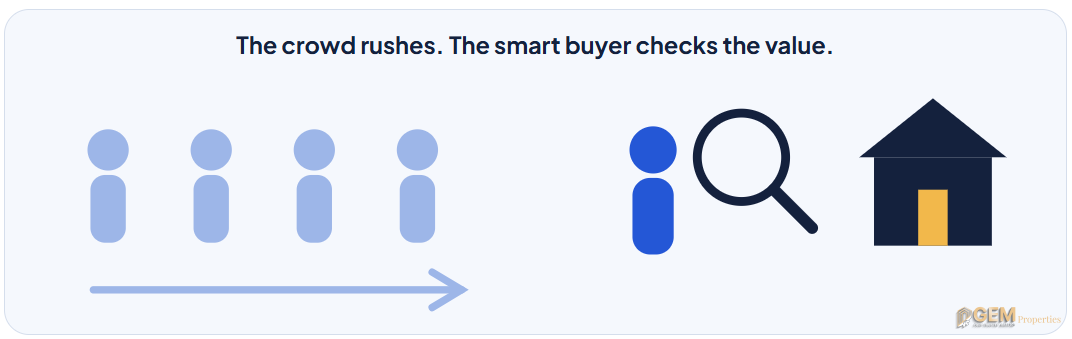
A neighbourhood gets popular, prices climb, and suddenly everyone says "buy now before it goes higher." That's FOMO, the fear of missing out. A rising market doesn't make every property a good one. In his 1992 shareholder letter, Buffett separates paying for real value from paying more simply because someone might pay even more later.
Before you buy, ask:
- What actually makes this property valuable?
- Is the location genuinely desirable, and what infrastructure is nearby?
- What is the rental and future development potential?
- How does the price compare with similar properties?
- Who will want to buy or rent it later?
2. Think in years, not weeks:
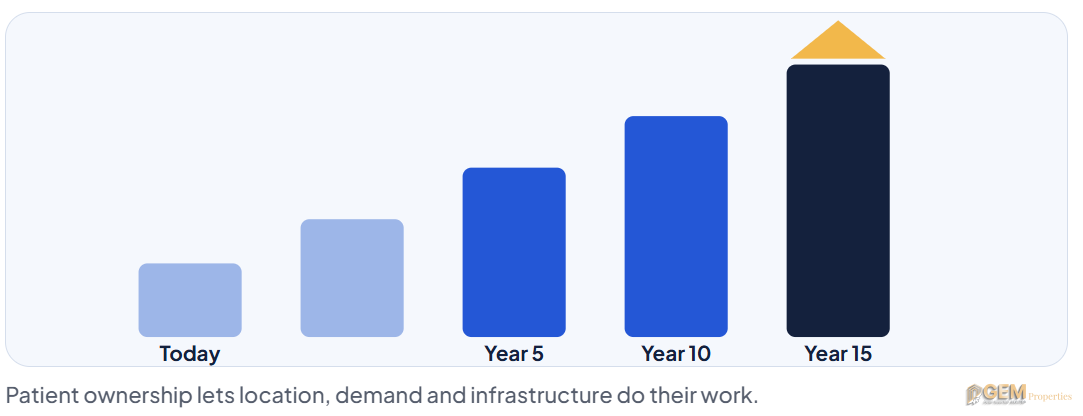
Prices can wobble in the short term, but a property's real potential follows slower forces: population growth, new roads and infrastructure, jobs, accessibility, business activity and rental demand. Berkshire's philosophy is built on thinking in decades. So swap "Can I sell it next year for more?" for a better question: what could this property become in 5, 10 or 15 years?
3. Price and value are not the same thing:
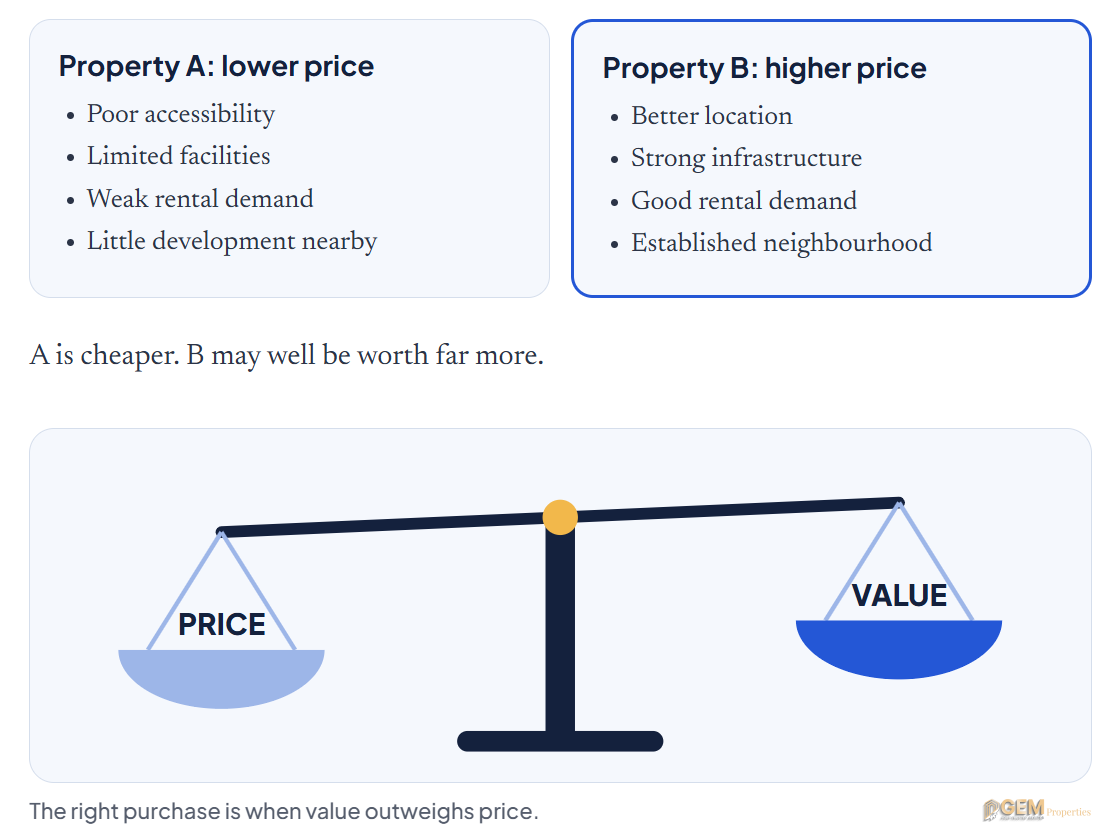
This is the big one. A PKR 20 million property isn't automatically better than one at PKR 15 million, and a PKR 10 million property isn't automatically a bargain. Price is what the seller asks. Value is what the property is really worth to you, based on its location, condition, potential and the market. Berkshire's Owner's Manual defines intrinsic value by the economic benefits an asset can deliver over its life. Property works differently from a company, but the idea holds: judge what you get for the price, not the price alone.

4. Don't let emotion make the decision:
Buying a home is emotional, and that's fine. A beautiful lounge, a stunning view or a luxury kitchen can make a property feel irresistible. Before you commit, ask: would I still like this property if the decoration were removed? Then check the fundamentals.
- Location: accessible and strategically placed?
- Price: reasonable compared with similar properties?
- Condition: what will repairs or renovation cost?
- Demand: will people want to live, work or run a business here?
- Future potential: could the area become more desirable?
- Exit plan: if you had to sell, who would your buyer be?
The goal isn't to remove emotion. It's to stop emotion from making the financial decision for you.
5. Understand what you're buying
Buffett only invests in what he understands. Do the same. When someone says "this area will be the next big thing," treat it as a reason to research, not a reason to pay. Check the documents and ownership, the development status, nearby infrastructure, market prices, rental demand, property condition, taxes and fees, and resale potential. Ask your questions before you pay, not after.
6. The best property isn't always the most expensive
A premium property can be a great purchase, as long as the extra price is backed by real advantages: better location, construction, facilities, neighbourhood and long-term demand. Don't ask "Is it expensive?" Ask "Does the value justify the price?"
7. Count the cost of a bad decision
Most people focus on returns. Experienced investors also think about risk. What if the property takes longer to sell, rent is lower than expected, development is delayed, maintenance costs rise or the market slows? You don't need to predict the future. You need to understand the risks well enough to decide with open eyes.
8. Location still matters, so look deeper
"Location, location, location" is true, but an address on a map isn't enough. Look at the whole ecosystem around the property.
- Connectivity: main roads, public transport, key destinations
- Infrastructure: reliable electricity, water, gas and internet
- Lifestyle: schools, hospitals, markets, parks, restaurants
- Economy: new businesses and jobs in the area
- Future plans: what is being built around it
- Neighbourhood: will it stay desirable?
9. Don't try to predict everything
"I know exactly what the market will do" is one of the riskiest sentences in property.
Interest rates, construction costs, tastes and government plans all change. Focus on what you can check today: current prices, comparable properties, the property's features, location, existing infrastructure, rental demand, ownership documents and risks. That beats guessing where prices will be in five years.
10. A smarter search starts with better questions
Property hunting should be more than scrolling listings. It should help you answer: What am I looking for, and why? What can I afford? Which locations make sense? Which features really matter? Is this worth investigating further? A good platform brings listings, locations, property details, agents and search tools together, so you move from discovery to comparison to research to decision faster.
The Buffett-inspired property checklist
Run through these seven questions before any serious property decision.
- Do I understand the property?If not, slow down.
- Does the price make sense?Compare it with similar properties and what you receive.
- Is the location strong?Think about today and the long term.
- What are the risks?Identify what could go wrong before assuming what will go right.
- Who would want it later?Picture future buyers or tenants.
- Do I want it, or does everyone else?Separate emotion from evidence.
- Can I hold it comfortably?A good decision shouldn't depend on a quick resale.
Final thought: buy with conviction, not hype
Buffett's reputation wasn't built on predicting every market move. It was built on discipline: understand what you're buying, think long term, pay attention to value, avoid speculation and follow facts instead of excitement. Those habits can make any property buyer more thoughtful and more confident.